That’s the essence of a new book titled, “Vital Factors: The Secret to Transforming Your Business - And Your Life.” The book’s co-author Lee Froschheiser is the chief executive officer and president of Management Action Programs (MAP) Inc. in Sherman Oaks, Calif.
Froschheiser was recently interviewed over the phone by SBT executive editor Steve Jagler.
SBT: One of the lines in your book is a reference about how effective leaders don’t spend most of their time telling people what to do. Instead, they create a system that empowers people to understand and execute the company’s mission statement. Is that a core principle of your book – empowering people and then holding them accountable?
Froschheiser: “The essence is to get people to understand what the right things to work on are, and empower them and train them and coach them. And when I give my speech in Milwaukee, I’m going to talk about empowerment, and what goes into empowerment. And then, you’re right. You’ve got to hold people accountable.
“I can go into companies and ask employees, ‘Do you feel empowered?’ And a lot of times, they’ll say, ‘No, I don’t feel empowered.’ As a leader, empowerment doesn’t mean they (employees) get to run amuck. As a leader, empowerment is that you train and develop and they understand that this is what I need to work on, and I’m going to be held accountable on this. It takes a lot of energy to tell people what to be doing all the time.
“I like to use the analogy of a buffalo herd and a gaggle of geese. I go fly-fishing up in Montana all the time, right in the heart of Yellowstone National Park, and there’s always buffalo herds there. If you ever watch a buffalo herd, a buffalo herd truly does have one lead buffalo. Where the lead buffalo goes, that’s where the herd goes. That’s why the buffalo hunters could wipe out so many buffaloes. They’d find the lead buffalo, they’d shoot it, and the rest of them would all stand around, waiting for the lead buffalo to move. And what happens in companies when the leader is always telling people what to do, is you become a buffalo herd. When the leader’s not there, guess what? Nothing happens. What you really want is an organization where there’s empowerment, and you become that gaggle of geese, where, when the lead goose gets tired and falls back, the next one takes the lead. And you don’t have that in an organization if you don’t have empowerment. So, you’re right on.”

Tuesday, 26 June 2007
Wednesday, 13 June 2007
Managing directors & others - time allocation
Rules of thumb
80% time dealing with customers and people
20% on other issues
All managers should spend circa 30%+ time on people engagement; e.g. 1 to 1s, team talks, etc activities
80% time dealing with customers and people
20% on other issues
All managers should spend circa 30%+ time on people engagement; e.g. 1 to 1s, team talks, etc activities
Supply Chain personnel impact on business
Rule of thumbs for returns to be expected on cost of employment.
minimum 7-11 times salary cost.
good 20
great 40+
minimum 7-11 times salary cost.
good 20
great 40+
Container ship capacities
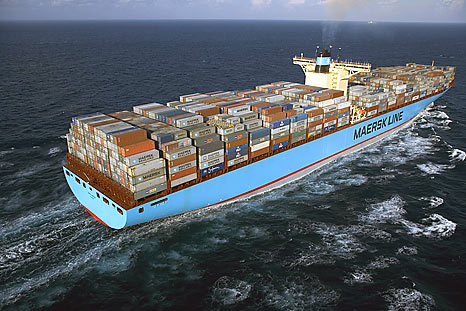
Bananas -an interesting perspective on volume and product.
Single container can carry 48,000 bananas - in theory container could hold 528 million bananas in a single voyage. Everyone in UK could have banana for breakfast for almost 9 days!
Single container can carry 48,000 bananas - in theory container could hold 528 million bananas in a single voyage. Everyone in UK could have banana for breakfast for almost 9 days!


Monday, 11 June 2007
Knowledge Paradox & a Competency Framework for Knowledge Management
Overload - objective to learn something new
Seductive Technology - promise > capacity to use (culture lags)
Business as Unusual - old leverage of physical assets
_________________________________________Seductive Technology - promise > capacity to use (culture lags)
Business as Unusual - old leverage of physical assets
Competency Analysis (from BT seminar 2000)
Learn - Innovate - Collaborate - Integrate - Lever
_________________________________________
Learn - BUILDING KNOWLEDGE - prepared Mind
- response to opportunity / threat
- competing on foresight
Innovate - CREATING KNOWLEDGE - open mind
- foster creativity, value ideas
- capture flow of ideas - process
- adapting physical spaces
- rewarding
- execute fast
Collaborative - SHARING KNOWLEDGE - collective mind
- community, sustainable relationship = share knowledge, working together with feedback
Integrate - STRUCTURING KNOWLEDGE - connected mind
- (Knowledge plus Knowledge) K+K = Value
- Connection outside usual boundaries
- Visibility / Transparency
- adapt and integrate change
- long planning cycles - dynamically reconfigure organisation
Lever - USING KNOWLEDGE - productive mind
- make productive use of resources and assets
- knowledge grows with sharing
- smart decisions on share/ protect
Friday, 1 June 2007

Wednesday, 2 May 2007
Strategy and Values (26 April)
· Reminder that at the end of the day the shareholders will be expecting optimum performance from their capital
· Source of potential competitive advantage from Values is probably Innovation and Professional Delivery, but that from Innovation ultimately we need to be able to show we can increase margins
· That Boards/SMTs need to consider what they are adding to ownership of a particular business and are they the natural owners
· Market value of a company will be driven by sources of competitive advantage which will be mainly intangibles
· Low margin business model of construction doomed to fail in long run –as no slack
· Quality of earnings hierarchy in city eyes; low products/projects [tough], services [some annuity’ through to Intellectual Property
· If a business buy a huge amount of services/ materials you immediately would consider that company must be stunningly good at purchasing
· Emergent & Determinant forms of Strategy
Thursday, 26 April 2007
Reasons why strategic plans fail
There are many reasons why strategic plans fail, especially:
- Failure to understand the customer
- Why do they buy
- Is there a real need for the product
- inadequate or incorrect marketing research
- Inability to predict environmental reaction
- What will competitors do
- Fighting brands
- Price wars
- Will government intervene
- Over-estimation of resource competence
- Can the staff, equipment, and processes handle the new strategy
- Failure to develop new employee and management skills
- Failure to coordinate
- Reporting and control relationships not adequate
- Organizational structure not flexible enough
- Failure to obtain senior management commitment
- Failure to get management involved right from the start
- Failure to obtain sufficient company resources to accomplish task
- Failure to obtain employee commitment
- New strategy not well explained to employees
- No incentives given to workers to embrace the new strategy
- Under-estimation of time requirements
- No critical path analysis done
- Failure to follow the plan
- No follow through after initial planning
- No tracking of progress against plan
- No consequences for above
- Failure to manage change
- Inadequate understanding of the internal resistance to change
- Lack of vision on the relationships between processes, technology and organization
- Poor communications
- Insufficient information sharing among stakeholders
- Exclusion of stakeholders and delegates
Tuesday, 31 October 2006
Schein's Career Anchors
Understanding what inspires you in your career
It used to be that once you decided on a career, you stayed in that career until you retired.
Not so anymore: The notion of lifetime employment has been replaced with lifetime employability. This means that you can’t rely on your employers to maintain your employment: You alone are responsible for your career progression and development.
Career management and planning in this environment is a challenge. So that you remain satisfied and fulfilled by the work you are doing, you need to adjust your career development activities accordingly.
Career development is no longer only about gaining the skills and knowledge you need to move up within one company. Career development today is about achieving flexibility and continuously evaluating and developing your skills in order to remain employable and fulfilled over the long term, regardless of who you are working for, and what industry you are working in.
To achieve this level of flexibility, you need to have a very strong sense of who you are and what you want from your work. Not everyone is motivated by the same thing, and our ambitions vary greatly. Some people thrive on being creative and innovative whereas others prefer stability and continuity. Challenge and constant simulation may be important to one person, while creating a work/life balance is paramount to another.
So, to effectively manage your career, you need to know more than what you enjoy doing: You need to understand WHY you like to do it. You need to figure out what the underlying characteristics of the work are that make the task enjoyable, interesting and stimulating to you.
To help people answer this question, Edgar Schein, a specialist in organisational psychology and career dynamics, identified eight "career anchors.”
Friday, 8 September 2006
Tuesday, 25 April 2006
Leading Change
John P. Kotter, professor of leadership at Harvard Business School expands in this book on a 1995 article he wrote for the Harvard Business Review. The amount of change in organizations has grown tremendously over the past two decades, and the rate of change will only accelerate in the next few decades. No wonder change, and leadership through change, are foremost concerns of CEO’s today.
stephen covey's seven habits of highly effective people
from Wikipedia....
Covey argues against what he calls "The Personality Ethic", something he sees as prevalent in many modern self-help books. He instead promotes what he labels "The Character Ethic": aligning one’s values with so-called "universal and timeless" principles. Covey adamantly refuses to confound principles and values; he sees principles as external natural laws, while values remain internal and subjective. Covey proclaims that values govern people’s behavior, but principles ultimately determine the consequences. Covey presents his teachings in a series of habits, manifesting as a progression from dependence via independence to interdependence.
N.B. Various phrases on this page are registered trade marks belonging to Stephen Covey.
Stephen Covey's principles are protected intellectual property and feature strongly in the Franklin Covey organization's portfolio of products and services.
Six Styles of Leadership
These are styles, not types. Any leader can use any style, and a good mix
that is customised to the situation is generally the most effective
approach.
that is customised to the situation is generally the most effective
approach.
The Visionary Leader
The Coaching Leader
The Affiliative Leader
The Democratic Leader
The Pace-setting Leader
The Commanding Leader
Wednesday, 12 April 2006
Performance - The GROW Coaching Model
There are wide variety of coaching models around. One of the most successful, and popular, is the GROW model.
Background
Good coaching lets a coachee become more aware of what they can do with their life and prepares them to take more responsibility for it. This is achieved through sessions structured around questioning.
What GROW does is sequence or order those question sessions, as in:
Goal
Reality
Options
Will.
Goal
In the goal stage, the coach enables the coachee to establish where they want to be, or what they want to achieve. Questions of value here include:
what do you want to achieve?
how would you like things to be?
what does success look like to you?
Once the coachee has created some goals for themselves, the coach and coachee need to work together in partnership to define the goals as clearly as possible.
Reality
In the reality stage, the coachee's goals are checked against the way things are now.
For example, this could be a check of the skills or knowledge the coachee currently has against those needed to reach their goals. Questions of value here include:
so, what happens at the moment?
what have you tried so far?
what do you think are the big roadblocks here?
how do you rate your current skill level?
Options
In the options stage, the coachee develops different potential routes between the current reality and the goal they want to achieve. The key here is not to find the 'right' answer but to maximise the choices on the table. Questions of value here include:
how would you get there...?
can you think of any other...?
how would you feel about...?
what would be the costs and benefits of that?
Will
In the will stage, the coachee needs to commit to, and take responsibility for, carrying out the agreed actions.
The discussions on the coaching session are turned into decisions, with action points attached. Questions of value here include:
what are you going to do?
what date will that be done by?
can you think of any obstacles?
what support will you need?
Background
Good coaching lets a coachee become more aware of what they can do with their life and prepares them to take more responsibility for it. This is achieved through sessions structured around questioning.
What GROW does is sequence or order those question sessions, as in:
Goal
Reality
Options
Will.
Goal
In the goal stage, the coach enables the coachee to establish where they want to be, or what they want to achieve. Questions of value here include:
what do you want to achieve?
how would you like things to be?
what does success look like to you?
Once the coachee has created some goals for themselves, the coach and coachee need to work together in partnership to define the goals as clearly as possible.
Reality
In the reality stage, the coachee's goals are checked against the way things are now.
For example, this could be a check of the skills or knowledge the coachee currently has against those needed to reach their goals. Questions of value here include:
so, what happens at the moment?
what have you tried so far?
what do you think are the big roadblocks here?
how do you rate your current skill level?
Options
In the options stage, the coachee develops different potential routes between the current reality and the goal they want to achieve. The key here is not to find the 'right' answer but to maximise the choices on the table. Questions of value here include:
how would you get there...?
can you think of any other...?
how would you feel about...?
what would be the costs and benefits of that?
Will
In the will stage, the coachee needs to commit to, and take responsibility for, carrying out the agreed actions.
The discussions on the coaching session are turned into decisions, with action points attached. Questions of value here include:
what are you going to do?
what date will that be done by?
can you think of any obstacles?
what support will you need?
Housing Prime Contract Charter
Defence Estates, on behalf of the Secretary of State for Defence, awarded the Housing Prime Contract to MODern Housing Solutions on 14th November 2005. In approaching the delivery of this contract in a spirit of partnering, and being committed to excellence in its delivery, Defence Estates and MODern Housing Solutions agree to adopt the following principles, which are enshrined in this Charter:
Our Service Families
We aspire to develop a best in class service, aimed at minimising breakdowns and optimising responsiveness to the occupants of Services Families Accommodation. In developing our relationship, we will measure all our activities against their potential to improve the service to our customers. We will confirm this alignment through regular surveys and consultation with representative bodies.
Health and Safety
We shall employ best safe working practice and adopt a Target Zero policy to accidents, incidents and occupational illness, as a means of ensuring that we provide a safe working environment for employees and customers alike.
Collaboration
We will actively collaborate in all aspects of the execution of the contract and we will share responsibility for the resolution of differences and issues in accordance with the procedures prescribed within the Housing Prime Contract. We jointly commit to developing a fully integrated delivery structure, aimed at eliminating unnecessary bureaucracy and optimising the efficiency of the maintenance of the SFA estate.
Trust
We will work together in mutual openness to promote trust, through eliminating any potential for fraud in our joint working. We agree to deal fairly, honestly, and openly at all times, in order to achieve quality of service, and value for money.
Honesty
We agree to face up to potential difficulties, whether within our respective organisations or in our shared working relationship, and to seek resolution of such difficulties openly, speedily and objectively.
Exchange of Information and Mutual Assistance
We agree to share all information pertinent to the Housing Prime Contract and the maintenance of the MOD SFA, and to work together to ensure our information systems supply fit for purpose information. We agree to provide constructive assistance and mutual support in solving problems to the benefit of the specified objectives of the contract.
Continuous Improvement
We shall work together to identify areas for improvement and ensure that lessons learned are incorporated into joint working practices.
and we agree to share the following Vision:
Jointly to provide best in class housing maintenance for Service families.
Our Service Families
We aspire to develop a best in class service, aimed at minimising breakdowns and optimising responsiveness to the occupants of Services Families Accommodation. In developing our relationship, we will measure all our activities against their potential to improve the service to our customers. We will confirm this alignment through regular surveys and consultation with representative bodies.
Health and Safety
We shall employ best safe working practice and adopt a Target Zero policy to accidents, incidents and occupational illness, as a means of ensuring that we provide a safe working environment for employees and customers alike.
Collaboration
We will actively collaborate in all aspects of the execution of the contract and we will share responsibility for the resolution of differences and issues in accordance with the procedures prescribed within the Housing Prime Contract. We jointly commit to developing a fully integrated delivery structure, aimed at eliminating unnecessary bureaucracy and optimising the efficiency of the maintenance of the SFA estate.
Trust
We will work together in mutual openness to promote trust, through eliminating any potential for fraud in our joint working. We agree to deal fairly, honestly, and openly at all times, in order to achieve quality of service, and value for money.
Honesty
We agree to face up to potential difficulties, whether within our respective organisations or in our shared working relationship, and to seek resolution of such difficulties openly, speedily and objectively.
Exchange of Information and Mutual Assistance
We agree to share all information pertinent to the Housing Prime Contract and the maintenance of the MOD SFA, and to work together to ensure our information systems supply fit for purpose information. We agree to provide constructive assistance and mutual support in solving problems to the benefit of the specified objectives of the contract.
Continuous Improvement
We shall work together to identify areas for improvement and ensure that lessons learned are incorporated into joint working practices.
and we agree to share the following Vision:
Jointly to provide best in class housing maintenance for Service families.
Sunday, 9 April 2006
Culture Change
In order to set out a view on Culture Change it is necessary to define a view on both culture and change with respect to organisations.
Culture
Culture is not just defined by formal things, such as mission statements and a company hierarchy, it is also defined by “soft” factors. Gerry Johnston of Cranfield Business School classified these factors as
These factors themselves help to define how people will intuitively respond in certain situations and reflect the values of an organisation. Stated and documented Values may not reflect well those actions that people adopted particularly in stressful or unfamiliar situations unless these truly reflect the culture of the organisation. Organisational cultures are particularly difficult to change.
Another way of considering the culture of an organisation, from Schein 1997, is to conceive it as consisting of three concentric layers with Values (as above) on the outside, Beliefs in the middle (more specific and are issues which people in the organisation can surface and talk above) and Taken for Granted Assumptions at the core – sometimes referred to as Paradigms (these are the aspects of an organisation that people find difficult to identify and explain).
There is no absolute right or wrong for a corporate culture and the appropriate culture will be in part dictated by the needs of the organisation to deliver a given strategy.
Charles Handy, in Understanding Organisations (1993), characterised culture into four key types.
characterised by | ||||
Type of culture | strategy driven by | MO (modus operandi) | suited to deliver | |
role culture | committees | structures and systems | efficiency | WorkManager process control |
task culture | teams | shared values | projects or tasks | MODern Housing Solutions |
power culture | leaders | command | rapid response | Armed Forces |
personal culture | individuals | personal creativity | innovation | |
Change
Management is becoming increasingly focused on the question of managing change. It represents a crucial switch from viewing companies as static entities to seeing them as dynamic organisations in a constant state of flux. Learning to live with change is for some people almost counter-intuitive. Traditional managers have almost always been conservative and, by definition, abhorred change. We need to learn to love change and feel comfortable with our creative intuition – in particular we need to make compassion, harmony and trust the foundation stones of business.
The ability to change per se is an overarching business imperative to survive and succeed and culture change is no different except that it has longer time horizons and will be driven by the strategic and operational needs of an organisation.
Role in effecting and leading culture change
Background
The last 10 years of service delivery that preceded the Housing Prime Contract was characterised by 20+ contracts covering a range of geographic areas and contractual responsibilities. These contracts were performed by subsidiaries from at least 5 construction to services companies that had inherited staff from the Government’s PSA; these staff had been integrated into their parent companies’ corporate culture to a limited extent as contracts had been let for only 3-4 years and staff had been ‘TUPE’d’ from one company to another during the decade. In addition the split of responsibilities between Establishment Works Consultants (EWC), focused on ‘white collar’ compliance and inspections, and Works Service Managers (WSM), focused on enabling delivery and administration of subcontract arrangements, has led to a divergence of values and cultures.
In addition to this we to need consider the interaction of cultures of Defence Estates, the armed forces hierarchy and the Service families themselves.
MODern Housing Solutions’ Values
MODern Housing Solutions has selected 5 key Values to help deliver the new organisation’s strategy and objectives. These are
Openness and Collaboration; by developing our staff and creating an open, rewarding place to work where success is the norm, best practice and lessons learned are shared and where challenge is welcomed.
These Values do not entail proscriptive procedures in all cases but provide our staff with the blueprint that enables them to know how to behave and perform services in cases where procedures are not written down (those Taken for Granted Assumptions as set out above). The Values are there to drive to the core of changing the organisation’s culture but they need sound training and awareness, strong role models and strong policing of people who are not prepared to adopt the expected norms.
Roles to effect and lead this change
The key roles are to
Monday, 2 January 2006
Communication
Everybody communicates! Modern research shows us that communication has three different but important elements.
WORDS (12%)
the actual written 'symbols' that are spoken - 'the map is not the territory'.
PARALINGUISTICS (35%)
the way the words are spoken; differences in: words, tone, inflection, dialect, tming and errors.
NON-VERBAL (53%)
the physical 'cluster' which is not spoken.
The percentages indicate how much each element contributes to the communication process in a 'face-to face' meeting.
WORDS (12%)
the actual written 'symbols' that are spoken - 'the map is not the territory'.
PARALINGUISTICS (35%)
the way the words are spoken; differences in: words, tone, inflection, dialect, tming and errors.
NON-VERBAL (53%)
the physical 'cluster' which is not spoken.
The percentages indicate how much each element contributes to the communication process in a 'face-to face' meeting.
How easy is it to change?
There is nothing more difficult to carry out, nor more doubtful of success, nor more dangerous to handle, than to initiate a new order of things." Machiavelli
p = h + d where
performance = habit plus drive
"Give me the strength to change what can be changed, the patience to accept what cannot be changed and the wisdom to distinguish the one from the other."
p = h + d where
performance = habit plus drive
"Give me the strength to change what can be changed, the patience to accept what cannot be changed and the wisdom to distinguish the one from the other."
On Integration, Consolidation, Reorganisation, etc...
"We trained hard, but it seemed that every time we were beginning to form up into teams, we would be reorganised. I was to learn later in life that we tend to meet any new situation by reorganising, and a wonderful method it can be for creating the illusion of progress while producing confusion, inefficiency, and demoralisation."
Caius Petronius, AD 66
Caius Petronius, AD 66
Saturday, 19 November 2005
Amplifying Effectiveness - models to consider
Congruence Model
The intent of the Congruence Model (Figure 1) is to remind the user that in dealing with different situations, the person should consider oneself, others involved in the situation, and the context of the situation. The inclusion or exclusion of any of these elements results in a stance that that may be blaming, placating, overly reasonable, or congruent.

Figure 1: Congruence Model
NB In Psychology, the Congruence Principle is a corollary of the principle of cognitive dissonance, the notion that it is impossible for a person (or organisation) to live too long where there is incongruence between a belief and a behaviour.
Assertive-Cooperative Model (based on Thomas Kilmann)
A similar model is the Thomas-Kilmann Conflict Mode Instrument (TKI), this model describes possible reactions to conflict based on consideration of self vs. consideration of others. It is possible to think of this model not in terms of a negative conflict but in the positive achievement of goals (expressed or suppressed) and whether you have consideration of your own goals (assertiveness) and consideration for other people’s goals (cooperativeness). A resultant situation that ends in both parties achieving their goals is an ideal situation and one of collaboration. In contrast a situation arising from compromise could be considered to be a very poor outcome where dissatisfaction is prevalent with all parties; the middle ground may be quite unsatisfactory and lead to conflict at a later stage.

Figure 2: Thomas-Kilmann Conflict Mode Instrument
The TKI reactions are as follows:
As a general rule many of us end up unsatisfactorily compromising on our goals due to a failure to engage adequately in understanding the needs and concerns of others or through not being assertive enough, in a constructive way, with our own needs. I expect that at its heart the centrist political third way aims to achieve new common goals and principles through an acknowledgement, understanding and reconciliation of historically polarised positions.
The intent of the Congruence Model (Figure 1) is to remind the user that in dealing with different situations, the person should consider oneself, others involved in the situation, and the context of the situation. The inclusion or exclusion of any of these elements results in a stance that that may be blaming, placating, overly reasonable, or congruent.
Figure 1: Congruence Model
NB In Psychology, the Congruence Principle is a corollary of the principle of cognitive dissonance, the notion that it is impossible for a person (or organisation) to live too long where there is incongruence between a belief and a behaviour.
Assertive-Cooperative Model (based on Thomas Kilmann)
A similar model is the Thomas-Kilmann Conflict Mode Instrument (TKI), this model describes possible reactions to conflict based on consideration of self vs. consideration of others. It is possible to think of this model not in terms of a negative conflict but in the positive achievement of goals (expressed or suppressed) and whether you have consideration of your own goals (assertiveness) and consideration for other people’s goals (cooperativeness). A resultant situation that ends in both parties achieving their goals is an ideal situation and one of collaboration. In contrast a situation arising from compromise could be considered to be a very poor outcome where dissatisfaction is prevalent with all parties; the middle ground may be quite unsatisfactory and lead to conflict at a later stage.
Figure 2: Thomas-Kilmann Conflict Mode Instrument
The TKI reactions are as follows:
- Avoiding. The goal is to delay or avoid.
- Accommodating. The goal is to yield.
- Compromising. The goal is to find a middle ground.
- Competing. The goal is to win.
- Collaborating. The goal is to find a win-win situation.
As a general rule many of us end up unsatisfactorily compromising on our goals due to a failure to engage adequately in understanding the needs and concerns of others or through not being assertive enough, in a constructive way, with our own needs. I expect that at its heart the centrist political third way aims to achieve new common goals and principles through an acknowledgement, understanding and reconciliation of historically polarised positions.
Tips and Ideas for Building Writing Skills and Confidence
- Learn from others. Find role models — people whose writing you like — and study their style. Read with intentionality. Notice what strikes you as good or bad writing.
- Writing anything is better than writing nothing. Practice makes less imperfect. Make every writing opportunity an opportunity to develop your writing skills.
- All good writing starts with the initial rough draft. Your first draft is just the starting point. Learn to trust yourself and the process.
- Don’t fall in love with your own words. Edit ruthlessly. Focus on tight writing. Become best friends with your delete key.
- Write like you speak. Eschew terminological obfuscation and fancy formality. Write in a conversational me-to-you tone.
- Let your subconscious do your writing for you. A great deal of writing happens when you are away from the keyboard. Write, put it away and then look at it later on with fresh eyes.
- When (not if) you get stuck, notice your writing “shoulds.” Acknowledge them and set them aside. Take a break then write an email about what you are stuck writing about.
- Find a setting that is conducive to writing. Use your favorite font. Play your favorite music. Find your favorite location. Use whatever approach works best for you
Wednesday, 2 November 2005
Morale and what employees want
'When dealing with people, remember you are not dealing with creatures of logic, but with creatures of emotions, creatures bristled with prejudice and motivated by pride and vanity.' Dale Carnegie quote
A leader's day-to-day actions and attitudes are critical. When a leader is fair, professional and optimistic, morale in the unit will be good. Good morale leads to success, and success leads to better morale.
The "short course" in understanding what employees really work for:
1. appreciation of the work they do
2. being part of something - belonging
3. Being respected and understood
4. Job security
5. Good wages
6. Interesting work
7. Personal growth and/or promotions
8. Good working conditions
9. Emotional security and stability
10. A sense of personal power
In truth when you stop and think they are the same expectation of what you and I want from work.
1. appreciation of the work they do
2. being part of something - belonging
3. Being respected and understood
4. Job security
5. Good wages
6. Interesting work
7. Personal growth and/or promotions
8. Good working conditions
9. Emotional security and stability
10. A sense of personal power
In truth when you stop and think they are the same expectation of what you and I want from work.
Dwight Eisenhower. 'Leadership is the art of getting somebody else to do something you want done; because he wants to do it.'
Empathy
The ability to understand another person's situation. Once you understand someone's position and why they are in it, you will be in a much better position to lead them out if it.
'A man always has two reasons for doing anything- a good reason and the real reason.' J P Morgan.
Understanding
''I like the dreams of the future than the history of the past.' Thomas Jefferson.
The present is important, and we must learn from the past. But the future provides a vision not yet attained - a target to aim for.
Mature, Consistent, Optimistic, Creative, Luck .... People with inspiration & vision
Leaders create commitment and are absolutely essential in times of chaos, crisis or change. 'Anyone can hold the helm when the sea is calm.'
'Think like a man of action, act like a man of thought'. Henri-Louis Bergson.
'We are what we repeatedly do.' Aristotle. In leadership the best surprise is no surprise.
'There is one thing stronger than all the armies in the world, and that is an idea whose time has come.' Victor Hugo.
Stay up-to-date. The closer you are to the future, the easier it is to predict.
Leaders always view a cup as being half full, not half empty. 'A leader is a dealer in hope'. Napoleon I. .
Preparation, Learning & Destiny
'Before everything else, getting ready is the secret of success.' - Henry Ford
'The man who is prepared has his battle half fought.' Cervantes.
Learning from the past.
'The further back you can look, the further forward you are likely to see.' Winston Churchill.
Destiny is not a matter of chance; it is a matter of choice. It is not something to be waited for but rather something to be achieved.
on Leaders and Recognition
The best leaders become cooler when the heat is turned up. Crisis is the true test of a person's leadership ability. 'The ultimate measure of a man is not where he stands in moments of comfort and convenience, but where he stands in times of challenge and controversy' - Martin Luther King
Leaders recognise good work as quickly as they recognise poor work. 'The deepest principle of human nature is the craving to be appreciated.' William James.
William James quotes (American Philosopher and Psychologist, leader of the philosophical movement of Pragmatism, 1842-1910)
Other quotes from William James
- Act as if what you do makes a difference. It does.
- Nothing is so fatiguing as the eternal hanging on of an uncompleted task.
- Whenever two men meet there are really six people present. There is each man as he sees himself, each man was the other sees him, and each man as he really is.
- Only necessity understood, and bondage to the highest is identical with true freedom.
- A great many people think they are thinking when they are merely rearranging their prejudices.
- Most people never run far enough on their first wind to find out they've got a second. Give your dreams all you've got and you'll be amazed at the energy that comes out of you.
- The greatest use of life is to spend it for something that will outlast it.
Confusius say
'The essense of knowledge is, living it, to apply it; not having it, to confess your ignorance.'
Being unselfish - 'he who wishes to secure the good of others, has already secured his own'.
Definitions; diplomacy and tact
Diplomacy is the art of enabling other people to have your own way.
'Tact is the ability to describe others as they see themselves.' (Abraham Lincoln).
Saturday, 29 October 2005

Monday, 24 October 2005
steer clear of the past lane
originally an extract from http://money.telegraph.co.uk/money/main.jhtml?xml=/money/2005/09/15/ccfifty15.xml(Filed: 15/09/2005) Link no longer available
This week: David Varney, HM Revenue & Customs executive chairman
This week: David Varney, HM Revenue & Customs executive chairman
Sunday, 23 October 2005
what Mandela taught me
originally an extract from http://money.telegraph.co.uk/money/main.jhtml?xml=/money/2005/09/08/ccfifty08.xml (Filed: 08/09/2005) Link no longer available
Bryan Sanderson, chairman of Standard Chartered and Bupa
There are lots of lessons on people: most of all that they're the most important part of any organisation.
Bryan Sanderson, chairman of Standard Chartered and Bupa
There are lots of lessons on people: most of all that they're the most important part of any organisation.
hear it through the grapevine
Originally an extract from http://money.telegraph.co.uk/money/main.jhtml?xml=/money/2005/09/29/ccfifty29.xml(Filed: 29/09/2005) Link no longer available.
Lord Kalms, life president of Dixon's Group
Knowledge is the most important thing that the boss has. He has to know everything that goes on in the business. He has to have an eye at the back of his head, be very sensitive, and be aware of everything that's happening.
Lord Kalms, life president of Dixon's Group
Knowledge is the most important thing that the boss has. He has to know everything that goes on in the business. He has to have an eye at the back of his head, be very sensitive, and be aware of everything that's happening.
if pain outweighs gain
originally an extract from http://money.telegraph.co.uk/money/main.jhtml?xml=/money/2005/10/13/ccfifty13.xml ..(Filed: 13/10/2005) Link no longer available.
Dawn Airey, managing director of Sky Networks
Dawn Airey, managing director of Sky Networks
build up a diverse team
originally an extract from http://money.telegraph.co.uk/money/main.jhtml?xml=/money/2005/10/20/ccfifty20.xml (Filed: 20/10/2005). Link no longer available
Paul Skinner, chairman of Rio Tinto
It was pretty late in my life as a business leader and manager that I began to realise just how important investing in people is.
Paul Skinner, chairman of Rio Tinto
It was pretty late in my life as a business leader and manager that I began to realise just how important investing in people is.
real leaders show, not tell
Originally extracted from http://money.telegraph.co.uk/money/main.jhtml?xml=/money/2005/10/27/ccfifty27.xml (Filed: 27/10/2005). Link no longer available.
Senior international business figures have agreed to share their experience with Fifty Lessons. This week: Clive Mather, president and CEO of Shell Canada
Senior international business figures have agreed to share their experience with Fifty Lessons. This week: Clive Mather, president and CEO of Shell Canada


change and you beat the rest
Originally an extract from http://money.telegraph.co.uk/money/main.jhtml?xml=/money/2005/09/22/ccfifty22.xml(Filed: 22/09/2005). Link no longer available.
Karan Bilimoria founder and CEO of Cobra Beer
Constant innovation is absolutely imperative because people are always going to copy what you're doing, and you can rarely stop that.
Karan Bilimoria founder and CEO of Cobra Beer
Constant innovation is absolutely imperative because people are always going to copy what you're doing, and you can rarely stop that.
Saturday, 22 October 2005


Sunday, 7 August 2005
THE JOHARI WINDOW: A GRAPHIC MODEL OF AWARENESS IN INTERPERSONAL RELATIONS
When Ingham and Luft first presented "The Johari Window" to illustrate relationship in terms of awareness, they were surprised to find so many people, academicians and nonprofessionals alike, using, and tinkering with, the model. It seems to lend itself as a heuristic device in speculating about human relations. (To read an article by Dr. Dorothea von Ritter-Rohr explaining the Johari Window in more detail, click here--PDF file.) It is simple to visualize the four quadrants which represent the Johari Window:
Monday, 25 July 2005


Sunday, 24 July 2005
Strategic reminder - Boston Consulting Box (BCG) and Portfolio Analysis
boston consulting box

The business portfolio is the collection of businesses and products that make up the company. The best business portfolio is one that fits the company's strengths and helps exploit the most attractive opportunities.
The company must:
(1) Analyse its current business portfolio and decide which businesses should receive more or less investment, and
(2) Develop growth strategies for adding new products and businesses to the portfolio, whilst at the same time deciding when products and businesses should no longer be retained.
Methods of Portfolio Planning
The two best-known portfolio planning methods are from the Boston Consulting Group and by General Electric/Shell. In each method, the first step is to identify the various Strategic Business Units ("SBU's") in a company portfolio. An SBU is a unit of the company that has a separate mission and objectives and that can be planned independently from the other businesses. An SBU can be a company division, a product line or even individual brands - it all depends on how the company is organised.

The business portfolio is the collection of businesses and products that make up the company. The best business portfolio is one that fits the company's strengths and helps exploit the most attractive opportunities.
The company must:
(1) Analyse its current business portfolio and decide which businesses should receive more or less investment, and
(2) Develop growth strategies for adding new products and businesses to the portfolio, whilst at the same time deciding when products and businesses should no longer be retained.
Methods of Portfolio Planning
The two best-known portfolio planning methods are from the Boston Consulting Group and by General Electric/Shell. In each method, the first step is to identify the various Strategic Business Units ("SBU's") in a company portfolio. An SBU is a unit of the company that has a separate mission and objectives and that can be planned independently from the other businesses. An SBU can be a company division, a product line or even individual brands - it all depends on how the company is organised.
Monday, 18 July 2005
We don't need another hero
Research from three associates of Ashridge Business School has brought to light the leadership values for the 21st century. Gone is the CEO superhero dispensing wisdom from on high, and in its place is the human leader with frailties and weaknesses like the rest of us.
Here, Ashridge associates George Binney, Gerhard Wilke and Colin Williams reveal their blueprint for legendary leaders
Also from Ashridge Leadership skills for the 21st century
Also from Ashridge Leadership skills for the 21st century
Subscribe to:
Posts (Atom)