Let's get serious about the low carbon economy. 58% of people in the Netherlands regularly ride bikes. In my view, the UK needs serious investment in wide ranging and integrated infrastructure to wean us off total addiction to private motor vehicles. Where by and large this is seen by the majority as a default entitlement regardless of the impact and real need.

Showing posts with label Sustainability. Show all posts
Showing posts with label Sustainability. Show all posts
Sunday, 22 April 2012


Thursday, 5 January 2012
Classic investment sales approach required?
Future diverse, affordable and resilient energy provision
I'm all for weaning us off our total reliance on current forms of fuel/supply and in particular those used for much of our electricity generation and distribution. Furthermore, I believe it is critical for a resilient and stable future for generations that come after us.
The Desertec vision is to be applauded and although ambitious it can revolutionise energy and politics in the region; benefits from playing and winning at such a technology challenge go far beyond building and utilising industrial production and securing a more diverse and resilient energy base.
Historical context
I realise that the diagram is simply indicative and not to scale. The fundamental flaws in high upfront investment for long-term private sector returns haven't changed from the time private companies created railways all over the UK in the 19th century - and then went bust later.
In the UK, there is a long list of these optimistically based projections to attract investment and achieve great results. The Channel Tunnel and the Channel Tunnel Rail Link in the past have on the whole been great for those involved in constructing and operating the facilities but not great for the people who were the ultimate providers of funds - certainly against the original business cases.
Maybe I'm reading too much into this schematic but the 'investment' case looks quite weak, even before it touches reality, unless you are a utility, technology or manufacturing company. Based on the above schematic published by DiiDesertEnergy on 5 January 2012
the long-term payoff for the 'mean' cost line for the range of technology specific renewables considered is a mix of
Do we really weigh up the pros and cons of this type of long-term investment with an honest appraisal of doing nothing? The opportunity lost from not investing in infrastructure rather than simply the opportunity lost in the use of capital against other uses of that capital. Surely, the functional and engineering success that is Sir Joseph Bazalgette's (and his teams) London sewer network legacy arises from a tremendous foresight, commitment and passion in knowing what great looks like rather than any prediction of the short-term return on investment.
NB What I like most about the Dii diagram is its honesty - there will be certain technology specific renewables that will be real 'dogs' in terms of an investment proposition and unfortunately we will have no idea what they will be or why. But that is life..
A great case for investing in long-term sustainable and predictable energy from Tidal range (and stream) sources
Given the tidal power technology
we should have the bottle as a country to go for a Severn and Mersey tidal power (barrage) schemes as a minimum.
Which leader will back that idea? It would certainly hot up the debate about what we need to do, and the choices that must be made, as a nation to really address the economic, social and behavioural challenges it will take to be a leading and affordable low carbon economy that's fit for a sustainable future.
NB
Desertec stands for the overall vision of supplying a large part of the world with sustainable power, by tapping the energy potential of the desert. Dii (launched as "Desertec Industrial Initiative") is a private industry consortium working towards enabling this vision in Europe, the Middle East and North Africa (EUMENA)
Photostream http://www.flickr.com/photos/diidesertenergy/
Dii market development graphic http://www.flickr.com/photos/diidesertenergy/6635132251/
Dii indicative map of sites http://flic.kr/p/9t1AiG
I'm all for weaning us off our total reliance on current forms of fuel/supply and in particular those used for much of our electricity generation and distribution. Furthermore, I believe it is critical for a resilient and stable future for generations that come after us.
The Desertec vision is to be applauded and although ambitious it can revolutionise energy and politics in the region; benefits from playing and winning at such a technology challenge go far beyond building and utilising industrial production and securing a more diverse and resilient energy base.
 |
| annotated DiiDesertEnergy - market development digram |
Historical context
I realise that the diagram is simply indicative and not to scale. The fundamental flaws in high upfront investment for long-term private sector returns haven't changed from the time private companies created railways all over the UK in the 19th century - and then went bust later.
In the UK, there is a long list of these optimistically based projections to attract investment and achieve great results. The Channel Tunnel and the Channel Tunnel Rail Link in the past have on the whole been great for those involved in constructing and operating the facilities but not great for the people who were the ultimate providers of funds - certainly against the original business cases.
Maybe I'm reading too much into this schematic but the 'investment' case looks quite weak, even before it touches reality, unless you are a utility, technology or manufacturing company. Based on the above schematic published by DiiDesertEnergy on 5 January 2012
- despite a circa 40% increase in the market price for electricity by 2050,
- ignoring the substantial displacement in cashflows that will crucify any estimates of Net Present Value
- and making no particular statements on risks; for example on demand from cutting massive waste, introducing smart grids and off grid supplies.
the long-term payoff for the 'mean' cost line for the range of technology specific renewables considered is a mix of
- a 'self sustaining market' for the manufacturing and technology companies and other institutions who form Dii, Medgrid and other and who are presumably the main beneficiaries from the intellectual property derived from these proposed investments made over the next 15-20 years
- (1) substantial loss on 'investment' in most cases or (2) massive taxpayer contribution (subsidy) towards any return for investors; if 2) occurs which is most likely what reward does the taxpayer receive and what real risk are the other 'investors' taking to achieve their return
Do we really weigh up the pros and cons of this type of long-term investment with an honest appraisal of doing nothing? The opportunity lost from not investing in infrastructure rather than simply the opportunity lost in the use of capital against other uses of that capital. Surely, the functional and engineering success that is Sir Joseph Bazalgette's (and his teams) London sewer network legacy arises from a tremendous foresight, commitment and passion in knowing what great looks like rather than any prediction of the short-term return on investment.
NB What I like most about the Dii diagram is its honesty - there will be certain technology specific renewables that will be real 'dogs' in terms of an investment proposition and unfortunately we will have no idea what they will be or why. But that is life..
A great case for investing in long-term sustainable and predictable energy from Tidal range (and stream) sources
Given the tidal power technology
- exists/works well,
- benefits arising fairly predictable and
- any environmental impact relatively benign and probably on balance positive to the overall ecology (unless undue weight is given to unscientific and emotionally based avian chirping from organisations that should frankly know better)
we should have the bottle as a country to go for a Severn and Mersey tidal power (barrage) schemes as a minimum.
Which leader will back that idea? It would certainly hot up the debate about what we need to do, and the choices that must be made, as a nation to really address the economic, social and behavioural challenges it will take to be a leading and affordable low carbon economy that's fit for a sustainable future.
NB
Desertec stands for the overall vision of supplying a large part of the world with sustainable power, by tapping the energy potential of the desert. Dii (launched as "Desertec Industrial Initiative") is a private industry consortium working towards enabling this vision in Europe, the Middle East and North Africa (EUMENA)
Photostream http://www.flickr.com/photos/diidesertenergy/
Dii market development graphic http://www.flickr.com/photos/diidesertenergy/6635132251/
Dii indicative map of sites http://flic.kr/p/9t1AiG
Monday, 13 September 2010
Low Carbon UK : Go for engineering challenge
Fundraiser: Hugh PorterMy page: http://uk.virginmoneygiving.com/HughPorter
My plan is to cycle from Orkney to Kent raising money for two charities
- The Outward Bound Trust which is dedicated to unlocking potential in young disadvantaged people and
- Help for Heroes - this is about me doing my little bit to show support for these extraordinarily brave and mainly young people.
I intend to look at selected engineering feats (mainly civil engineering) along the route and consider the implications of the big changes I (and perhaps we all) need to make to move to a low carbon economy. I will take David JC MacKay's book Sustainable Energy - without the hot air with me as a reference guide.

Through Virgin Money Giving, you can sponsor me and donations will be quickly processed and passed to charities. Virgin Money Giving is a not for profit organisation and will claim gift aid on a charity's behalf where the donor is eligible for this. I really appreciate all your support and thank you for any donations.

Wednesday, 21 July 2010
BERR UK Energy flow charts - a useful resource
The Energy flow chart 2008[filetype:pdf filesize: 376.24Kb] illustrates the flow of primary fuels from home production and imports to their eventual final uses. DECC shows them in their original state, and after being converted into different kinds of energy by the secondary fuel producers. The flows are measured in million-tonnes of oil equivalent (mtoe), with the widths of the bands approximately proportional to the size of the flow they represent.
The next update, in summer 2010, will contain the 2009 UK energy flows.
According to Wikipedia 1 MWh = 0.086 toe, therefore 1 TWh = 0.086 mtoe.
So an annual year output of say a Cardiff-Weston Tidal Barrage at 17 TWh would be equivalent to 1.5 mtoe. This is above the same as the consumption of the UK's Iron and Steel industry but perhaps not all generated at the right time!

NB Best place to view chart is PDF on BERR website above but it is shown below to show concept.

NB Best place to view chart is PDF on BERR website above but it is shown below to show concept.
Monday, 12 July 2010


Sunday, 20 June 2010

Tuesday, 13 April 2010
Heavy-lift and ultra-heavy-lift hybrid aircraft
There appear to be an increasing array of vehicles in a class of hybrid aircraft which derive more than half of their lift by Helium buoyancy and the balance via aerodynamic lift produced by aerodynamic shaping.
These would appear in effect to be modern day successors to airships.
A short list of websites include
Recent history and issues
Patent and design issues surrounding recent developments appear to be an issue in some reports. Anecdotally there are appear to several companies with similar designs and brand names and is not clear what if any is the association between them.
It was reported that in July 2005, the Advanced Technologies Group Ltd went into administration under Part II of the Insolvency Act 1986. The article in aerospace technology includes examples of model, referred to as SkyCats, and their use.
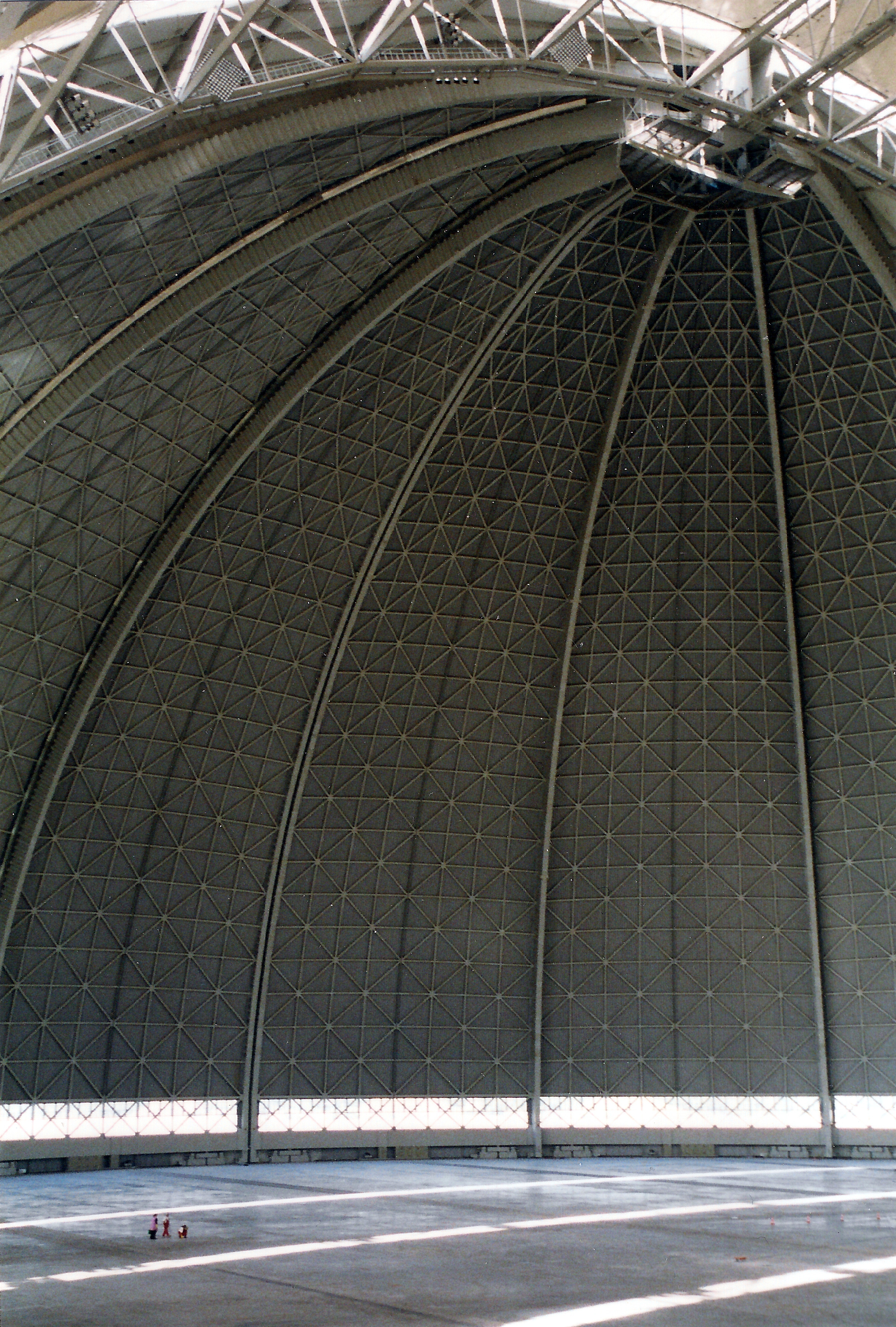
The German Cargolifter project was abandoned in 2002. The three people in the bottom left of the picture give a sense of the scale of this hangar.

These would appear in effect to be modern day successors to airships.
A short list of websites include
- Hybrid Air Vehicles (HAV) with a range of their own SkyCats. Website link include video of test flight. Powered by gas turbines the 200 model will carry payload of 200 tonnes and has dimensions of 185m x 77m x 47m. Their Hybrid Air Vehicles (HAV) range will take payloads spanning 20 to 1000 tonnes and operate at heights up to circa 3,000m at speeds between 160 and 200 km/h, with endurance up to 5 days. They further note that the SkyCats consume as much as 70% less fuel per tonne kilometre than conventional aircraft.
- SkyFreight - heavy lift cargo from World SkyCat. Their website claims that 'at under $0.20 per ton/km, and given the vehicle’s relatively high speed (155 kph), the SkyCat-220 becomes directly cost-competitive with trucks and other forms of overland freight.'
- Lockheed Martin P-791 a long-endurance multi-intelligence vehicle (LEMV)
Recent history and issues
Patent and design issues surrounding recent developments appear to be an issue in some reports. Anecdotally there are appear to several companies with similar designs and brand names and is not clear what if any is the association between them.
It was reported that in July 2005, the Advanced Technologies Group Ltd went into administration under Part II of the Insolvency Act 1986. The article in aerospace technology includes examples of model, referred to as SkyCats, and their use.
The German Cargolifter project was abandoned in 2002. The three people in the bottom left of the picture give a sense of the scale of this hangar.
Saturday, 10 April 2010

Saturday, 3 April 2010
Logistic options for 21st Century - leading future infrastructure requirement?
The Transport Act 1947 nationalised the road haulage industry and resulted in British Road Services delivering most requirements through a number of operating units.
I'm told this meant that outlying villages and towns would get
- one delivery per day from one organisation that knew the area and people well
- haulage was optimised so that trucks were rarely without a load of some sort!
 How real that recollection is, there is no doubt that demand from the movement of goods must be running at a higher level today than it ever was 60 years ago. The nature (size, weight and packaging) of the goods to be transported more specialised and sophisticated that it was.
On the other hand, there is something to be said for a more open market (do branded supermarket share space in their HGVs) to optimise loads of each vehicles and avoid empty truck movements.
Friday, 12 February 2010
The Right Track - High Speed 2 (HS-2) paper by Bow Group
This is a good read. The proposed accelerated timetable over current HMG plans is good as is the intent to take the route via a Heathrow Hub and to maximise regenerative benefit to UK as a whole.
Tuesday, 12 January 2010
Peak Energy - Tapping source of power from oceans

Interesting blog covering range of topics including some tidal ideas - although loading on this tidal flow structure must be immense.
Tidal Power - Woodshed Technologies Ltd, TGL and other links
Info mainly sourced from websites.......
 CleanTechCom Limited is a Scottish registered company formed in 2006 by John Griffiths and Steve Hastings. This company is today wholly owned by Woodshed Technologies Limited.
They are involved in the Department for Energy and Climate Change (DECC) Severn Embryonic Technologies Scheme (SETS) funded support into Severn Tidal Fence through the Severn Tidal Fence Consortium.
 CleanTechCom Limited is a Scottish registered company formed in 2006 by John Griffiths and Steve Hastings. This company is today wholly owned by Woodshed Technologies Limited.
They are involved in the Department for Energy and Climate Change (DECC) Severn Embryonic Technologies Scheme (SETS) funded support into Severn Tidal Fence through the Severn Tidal Fence Consortium.
The STF Consortium is headed by IT Power. CleanTechCom has brought additional co-financing to the study, which is also supported by technical expertise from Marubeni (Europe), Metoc, NaREC, BMT Fleet Technology, Edinburgh University, and Sigma Offshore.
Saturday, 21 November 2009
UK - Blake's Parliamentary Year Book 2010 - "All Change" rail editorial


Editorial written in March 2009.
photos from top
1. St Pancras station
# southeastern highspeed snaps
2.Chatham Station - May 2009 (not in service!)
3. Ebbsfleet International Station - August 2009
Southeastern is owned by Govia, which is itself jointly owned by Go-Ahead Group and Keolis, who also operate the neighbouring Southern operating company which overlaps with Southeastern in some areas. The company’s formal name, under which it mounted its bid for the franchise, is London and South Eastern Railway.
Keolis was formerly an investment of 3i.
Groupe SNCF and a consortium comprising AXA (acting through AXA Private Equity) and Caisse de dépôt et placement du Québec, agreed to acquire a majority participation (55%) in Groupe Keolis. Within the consortium itself, the shareholding will be shared equally between the two partners. Groupe SNCF retains its current equity participation (45%) and remains the Group’s key industrial shareholder.
Early in 2010, there was consideration in the press of a potential merger between Keolis and Arriva.
Groupe SNCF and a consortium comprising AXA (acting through AXA Private Equity) and Caisse de dépôt et placement du Québec, agreed to acquire a majority participation (55%) in Groupe Keolis. Within the consortium itself, the shareholding will be shared equally between the two partners. Groupe SNCF retains its current equity participation (45%) and remains the Group’s key industrial shareholder.
Early in 2010, there was consideration in the press of a potential merger between Keolis and Arriva.
Thursday, 18 June 2009
Energy requirements of different forms of passenger transport.
more Sustainable Energy - without the hot air David JC MacKay
 Figure 20.23. Energy requirements of different forms of passenger transport. The vertical coordinate shows the energy consumption in kWh per 100 passenger-km. The horizontal coordinate indicates the speed of the transport. The “Car (1)” is an average UK car doing 33 miles per gallon with a single occupant. The “Bus” is the average performance of all London buses. The “Underground system” shows the performance of the whole London Underground system. The catamaran is a diesel-powered vessel. I’ve indicated on the left-hand side equivalent fuel efficiencies in passenger-miles per imperial gallon (p-mpg).Hollow point-styles show best-practice performance, assuming all seats of a vehicle are in use. Filled point-styles indicate actual performance of a vehicle in typical use.See also figure 15.8 (energy requirements of freight transport).
Figure 20.23. Energy requirements of different forms of passenger transport. The vertical coordinate shows the energy consumption in kWh per 100 passenger-km. The horizontal coordinate indicates the speed of the transport. The “Car (1)” is an average UK car doing 33 miles per gallon with a single occupant. The “Bus” is the average performance of all London buses. The “Underground system” shows the performance of the whole London Underground system. The catamaran is a diesel-powered vessel. I’ve indicated on the left-hand side equivalent fuel efficiencies in passenger-miles per imperial gallon (p-mpg).Hollow point-styles show best-practice performance, assuming all seats of a vehicle are in use. Filled point-styles indicate actual performance of a vehicle in typical use.See also figure 15.8 (energy requirements of freight transport).Thursday, 11 June 2009
Analysts: 'The recession has ended'; the continuing revolution
I really don't think we have seen the full impact of the major structural changes that are continuing to be necessary to address issues arising from the internet and climate change; reduced transaction costs impacting on supply and demand challenged through optimising/prioritising energy and water use.

During the 'debt decade', as I believe we are stuck in, we will have to learn to severely curtail our expenditure to pay off the excess of the past, and that may help us set off on the right path. It is going to mean a radical change in leadership, expectations and behaviour to make sure the UK pulls through which I'm not sure many of us fully realise and the government its really in a position to be too open about.
For me we need to be really taking out waste in the economy - including excessive consumerism, inefficient energy cycles and unfettered long distance travel - plus we need to put more detailed thought into the full life cycle cost of assets and services. At the same, we have processes and organisations which need radical overhaul; e.g. aspects of local government which is by anyone's measure in need of becoming more efficient and effective and simpler to access.
This implies revolutionary change in employment models, forms of employment itself, our use of transport modes and in our wider economic activity internally and globally. We are ill prepared for this change as we know as little about the direction of travel and the means to get there as people did at the start of the industrial revolution!
The good news is that I believe the UK has many strengths in our favour;
- a temperate maritime climate in a relative benign region free from material, sudden climatic and seismic events
- a reasonably secure source of potential future energy and fresh water supply
- a free-ish market based and educated democracy that values participation in society
- being on a naturally attractive and fertile island!
During the 'debt decade', as I believe we are stuck in, we will have to learn to severely curtail our expenditure to pay off the excess of the past, and that may help us set off on the right path. It is going to mean a radical change in leadership, expectations and behaviour to make sure the UK pulls through which I'm not sure many of us fully realise and the government its really in a position to be too open about.
For me we need to be really taking out waste in the economy - including excessive consumerism, inefficient energy cycles and unfettered long distance travel - plus we need to put more detailed thought into the full life cycle cost of assets and services. At the same, we have processes and organisations which need radical overhaul; e.g. aspects of local government which is by anyone's measure in need of becoming more efficient and effective and simpler to access.
This implies revolutionary change in employment models, forms of employment itself, our use of transport modes and in our wider economic activity internally and globally. We are ill prepared for this change as we know as little about the direction of travel and the means to get there as people did at the start of the industrial revolution!
The good news is that I believe the UK has many strengths in our favour;
- a temperate maritime climate in a relative benign region free from material, sudden climatic and seismic events
- a reasonably secure source of potential future energy and fresh water supply
- a free-ish market based and educated democracy that values participation in society
- being on a naturally attractive and fertile island!
Sunday, 26 April 2009
Google Powermeter
 | |||||||
| What Google is DoingGoogle PowerMeter, now in prototype, will receive information from utility smart meters and energy management devices and provide anyone who signs up access to her home electricity consumption right on her iGoogle homepage. The graph below shows how someone could use this information to figure out how much energy is used by different household activites. 
| ||||||


The Conservatives' plan for a 'Green technology recovery'
George Osborne has set out a series of measures that could be introduced in next week’s Budget and would bring about a green technology revolution in Britain.
The Shadow Chancellor stressed, “The Budget is not just an opportunity to help people now; it’s also a chance to chart a new course for the future.”

And he outlined a series of policies to “kick-start a green recovery” built on new technologies developed and manufactured in Britain:
- A £6,500 energy efficient entitlement for every home in Britain
- Funding at least three carbon capture and storage pilots (2)
- The introduction of feed-in tariffs (4) and smart meters (3) to encourage homes to microgenerate using wind turbines and solar power
- A national recharging network for electric vehicles (5)
- Beginning work on a new high-speed rail network (6)
- Investing in the creation of an electricity internet (7)
- Providing government loan guarantees to companies investing in green technologies
- Creating the world’s first environmental trading market
- Introducing a network of Marine Energy Parks
- Building an offshore DC cable network (10)
George stressed their plan “could transform Britain”: “It would unleash £30 billion of new private sector investment, without adding a penny to the national debt. It would lay the path to a greener future. And it would help build a future economy where we save and invest for tomorrow instead of borrow and spend for today.”
Saturday, 25 April 2009
Tidal Power - David JC MacKay; the beauties of tide
extracted from http://www.inference.phy.cam.ac.uk/withouthotair/c14/page_87.shtml
Tide power has never been used on an industrial scale in Britain, so it’s hard to know what economic and technical challenges will be raised as we build and maintain tide-turbines – corrosion, silt accumulation, entanglement with flotsam? But here are seven reasons for being excited about tidal power in the British Isles.
1. Tidal power is completely predictable; unlike wind and sun, tidal power is a renewable on which one could depend; it works day and night all year round; using tidal lagoons, energy can be stored so that power can be delivered on demand.

2. Successive high and low tides take about 12 hours to progress around the British Isles, so the strongest currents off Anglesey, Islay, Orkney and Dover occur at different times from each other; thus, together, a collection of tide farms could produce a more constant contribution to the electrical grid than one tide farm, albeit a contribution that wanders up and down with the phase of the moon.
3. Tidal power will last for millions of years.
4. It doesn’t require high-cost hardware, in contrast to solar photovoltaic power.
5. Moreover, because the power density of a typical tidal flow is greater than the power density of a typical wind, a 1 MW tide turbine is smaller in size than a 1 MW wind turbine; perhaps tide turbines could therefore be cheaper than wind turbines.
6. Life below the waves is peaceful; there is no such thing as a freak tidal storm; so, unlike wind turbines, which require costly engineering to withstand rare windstorms, underwater tide turbines will not require big safety factors in their design.
7. Humans mostly live on the land, and they can’t see under the sea, so objections to the visual impact of tide turbines should be less strong than the objections to wind turbines.
Tidal power, while clean and green, should not be called renewable. Extracting power from the tides slows down the earth’s rotation. We definitely can’t use tidal power long-term.
False. The natural tides already slow down the earth’s rotation. The natural rotational energy loss is roughly 3 TW (Shepherd, 2003). Thanks to natural tidal friction, each century, the day gets longer by 2.3 milliseconds.
Many tidal energy extraction systems are just extracting energy that would have been lost anyway in friction. But even if we doubled the power extracted from the earth–moon system, tidal energy would still last more than a billion years.
page no.
Beauties of tide
Totting everything up, the barrage, the lagoons, and the tidal stream farms could deliver something like 11 kWh/d per person (figure 14.10).Tide power has never been used on an industrial scale in Britain, so it’s hard to know what economic and technical challenges will be raised as we build and maintain tide-turbines – corrosion, silt accumulation, entanglement with flotsam? But here are seven reasons for being excited about tidal power in the British Isles.
1. Tidal power is completely predictable; unlike wind and sun, tidal power is a renewable on which one could depend; it works day and night all year round; using tidal lagoons, energy can be stored so that power can be delivered on demand.
2. Successive high and low tides take about 12 hours to progress around the British Isles, so the strongest currents off Anglesey, Islay, Orkney and Dover occur at different times from each other; thus, together, a collection of tide farms could produce a more constant contribution to the electrical grid than one tide farm, albeit a contribution that wanders up and down with the phase of the moon.
3. Tidal power will last for millions of years.
4. It doesn’t require high-cost hardware, in contrast to solar photovoltaic power.
5. Moreover, because the power density of a typical tidal flow is greater than the power density of a typical wind, a 1 MW tide turbine is smaller in size than a 1 MW wind turbine; perhaps tide turbines could therefore be cheaper than wind turbines.
6. Life below the waves is peaceful; there is no such thing as a freak tidal storm; so, unlike wind turbines, which require costly engineering to withstand rare windstorms, underwater tide turbines will not require big safety factors in their design.
7. Humans mostly live on the land, and they can’t see under the sea, so objections to the visual impact of tide turbines should be less strong than the objections to wind turbines.
Mythconceptions
Tidal power, while clean and green, should not be called renewable. Extracting power from the tides slows down the earth’s rotation. We definitely can’t use tidal power long-term.
False. The natural tides already slow down the earth’s rotation. The natural rotational energy loss is roughly 3 TW (Shepherd, 2003). Thanks to natural tidal friction, each century, the day gets longer by 2.3 milliseconds.Many tidal energy extraction systems are just extracting energy that would have been lost anyway in friction. But even if we doubled the power extracted from the earth–moon system, tidal energy would still last more than a billion years.
Notes and further reading
page no.
82The power of an artificial tide-pool. The power per unit area of a tide-pool is derived in Chapter G, p311.
–Britain is already supplied with a natural tide-pool . . . known as the North Sea. I should not give the impression that the North Sea fills and empties just like a tide-pool on the English coast. The flows in the North Sea are more complex because the time taken for a bump in water level to propagate across the Sea is similar to the time between tides. Nevertheless, there are whopping tidal currents in and out of the North Sea, and within it too.
83The total incoming power of lunar tidal waves crossing these lines has been measured to be 100 kWh per day per person. Source: Cartwright et al. (1980). For readers who like back-of-envelope models, Chapter G shows how to estimate this power from first principles.
84La Rance generated 16 TWh over 30 years. That’s an average power of 60 MW. (Its peak power is 240 MW.) The tidal range is up to 13.5 m; the impounded area is 22 km2; the barrage 750 m long. Average power density: 2.7 W/m2. Source: [6xrm5q].
85The engineers’ reports on the Severn barrage...say 17 TWh/year. (Taylor, 2002b). This (2 GW) corresponds to 5% of current UK total electricity consumption, on average.
86Power per unit area of tidal lagoons could be 4.5 W/m2. MacKay (2007a).
–Britain is already supplied with a natural tide-pool . . . known as the North Sea. I should not give the impression that the North Sea fills and empties just like a tide-pool on the English coast. The flows in the North Sea are more complex because the time taken for a bump in water level to propagate across the Sea is similar to the time between tides. Nevertheless, there are whopping tidal currents in and out of the North Sea, and within it too.
83The total incoming power of lunar tidal waves crossing these lines has been measured to be 100 kWh per day per person. Source: Cartwright et al. (1980). For readers who like back-of-envelope models, Chapter G shows how to estimate this power from first principles.
84La Rance generated 16 TWh over 30 years. That’s an average power of 60 MW. (Its peak power is 240 MW.) The tidal range is up to 13.5 m; the impounded area is 22 km2; the barrage 750 m long. Average power density: 2.7 W/m2. Source: [6xrm5q].
85The engineers’ reports on the Severn barrage...say 17 TWh/year. (Taylor, 2002b). This (2 GW) corresponds to 5% of current UK total electricity consumption, on average.
86Power per unit area of tidal lagoons could be 4.5 W/m2. MacKay (2007a).
Sustainable Energy - without the hot air
|
Contents |
|
|
Subscribe to:
Posts (Atom)