Let's get serious about the low carbon economy. 58% of people in the Netherlands regularly ride bikes. In my view, the UK needs serious investment in wide ranging and integrated infrastructure to wean us off total addiction to private motor vehicles. Where by and large this is seen by the majority as a default entitlement regardless of the impact and real need.

Showing posts with label Transport. Show all posts
Showing posts with label Transport. Show all posts
Sunday, 22 April 2012


Tuesday, 18 January 2011
Tuesday, 16 November 2010
Easy Boris - a useful tool for finding bike spaces in London without need for sophisticated smart phone apps!
my link is woodrush.com/bb but following the instructions anyone can create their own.
Saturday, 23 October 2010
Thursday, 21 October 2010
TfL - Interchange Best Practice Guidelines
A seminar at The Infrastructure Show, NEC 19 October 2010, considered how value for money can be achieved in interchange upgrades over the long term. John McNulty - Head of Interchange, also described methods in use in London by Transport for London (TfL) to ensure costs are kept low where possible, knowledge shared and the whole range of options considered to maximise the opportunity to ensure public transport, walking and cycling are as attractive as they can be.
Best Practice guidelines have been published and updated as knowledge and case studies have been recorded. These are based around four design themes Efficiency, Usability, Understanding and Quality.
Interchanges have been defined and graded into a number of types from strategic, inter-regional to local. TfL have classified a total 645 material interchanges, where people can change between one mode of transport to another. The Legible London totem signs are an example of the effort to made to provide simple information to people in a consistent way; at the same time it provides a great opportunity to 'de-cluster' streets of vast numbers of signage etc. and integrate relevant information in one place.
This itself is not a simple job as there are many views that could have been considered; this article in the Londonist attests.
The use of a common relevant transport model across all the different stakeholders, for recent major and complex interchanges such as King's Cross/St Pancras, have provided an invaluable tool to ensure demand and design requirements are fully understood, considered and implemented.
The use of a common relevant transport model across all the different stakeholders, for recent major and complex interchanges such as King's Cross/St Pancras, have provided an invaluable tool to ensure demand and design requirements are fully understood, considered and implemented.
It would be useful to see some simple key metrics for the potential capacity (local and regional), intended design/ functionality, and actual use of the interchanges in each category types. This would enable people to see the tangible benefits of better and optimal interchange design, the value of investing in the detail of the scheme for long-term gains in performance and behavioural change.
+sample+EXTRACT.pdf) |
| Example of two pages within the TfL Quick Reference Guide |
Friday, 15 October 2010
TfL Cycle Hire Scheme (Boris Bikes) and Other Scheme Visualisations - Oliver G O'Brien
Suprageography - http://oliverobrien.co.uk/
Weather at UCL http://www.casa.ucl.ac.uk/weather/
London Profiler (on Google Map interface) http://www.londonprofiler.org/
Oliver O'Brien is a research associate with CASA (Centre for Advanced Spatial Analysis), University College London.
1-19 Torrington Place - London - WC1E 7HB.
Weather at UCL http://www.casa.ucl.ac.uk/weather/
London Profiler (on Google Map interface) http://www.londonprofiler.org/
Oliver O'Brien is a research associate with CASA (Centre for Advanced Spatial Analysis), University College London.
1-19 Torrington Place - London - WC1E 7HB.
Tuesday, 29 June 2010
Route visualisation with cycle routes
Link to free cycle maps at opencyclemaps.org >> National and international cycle maps
Local runs and cycle routes
Local runs and cycle routes
Tuesday, 13 April 2010
Heavy-lift and ultra-heavy-lift hybrid aircraft
There appear to be an increasing array of vehicles in a class of hybrid aircraft which derive more than half of their lift by Helium buoyancy and the balance via aerodynamic lift produced by aerodynamic shaping.
These would appear in effect to be modern day successors to airships.
A short list of websites include
Recent history and issues
Patent and design issues surrounding recent developments appear to be an issue in some reports. Anecdotally there are appear to several companies with similar designs and brand names and is not clear what if any is the association between them.
It was reported that in July 2005, the Advanced Technologies Group Ltd went into administration under Part II of the Insolvency Act 1986. The article in aerospace technology includes examples of model, referred to as SkyCats, and their use.
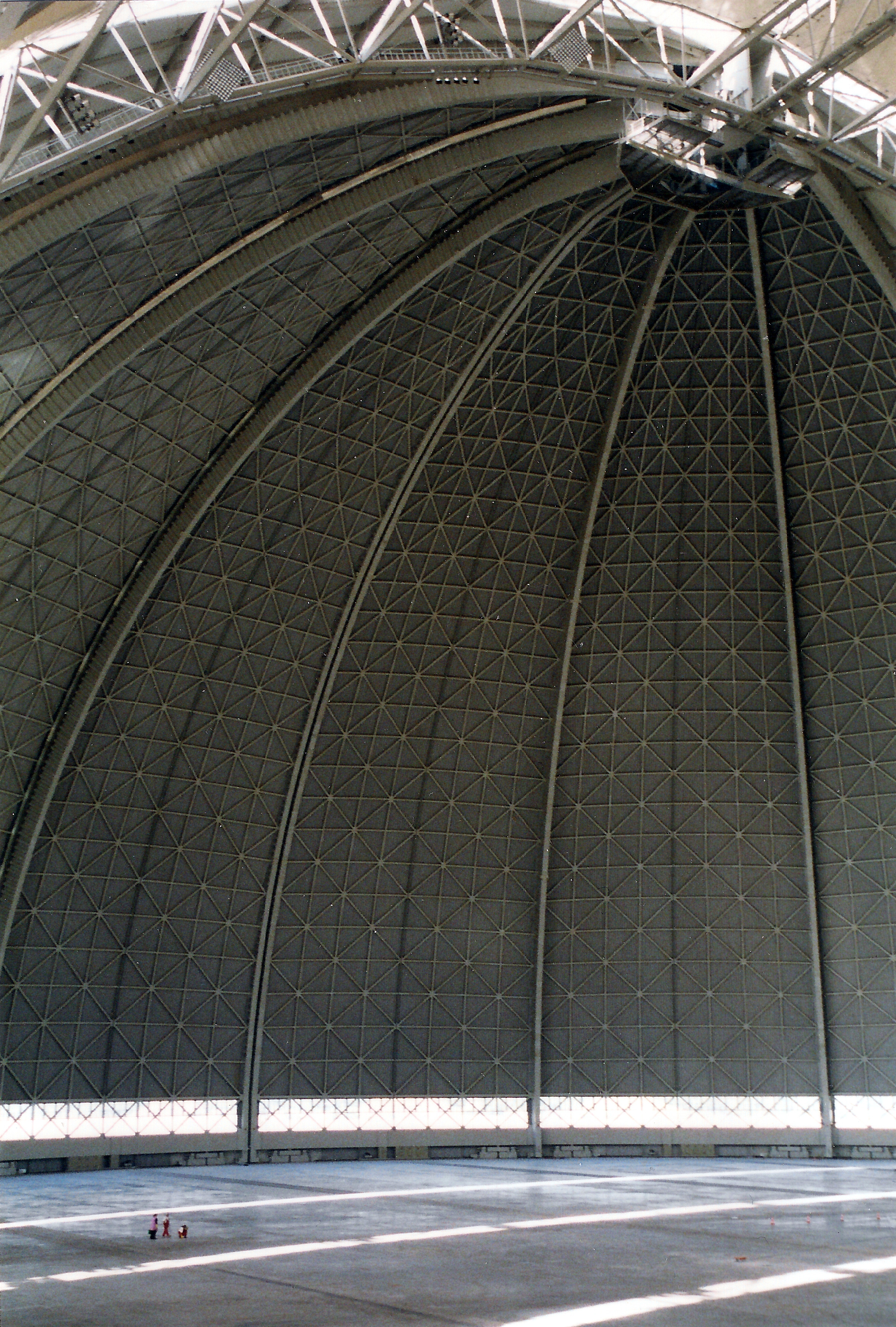
The German Cargolifter project was abandoned in 2002. The three people in the bottom left of the picture give a sense of the scale of this hangar.

These would appear in effect to be modern day successors to airships.
A short list of websites include
- Hybrid Air Vehicles (HAV) with a range of their own SkyCats. Website link include video of test flight. Powered by gas turbines the 200 model will carry payload of 200 tonnes and has dimensions of 185m x 77m x 47m. Their Hybrid Air Vehicles (HAV) range will take payloads spanning 20 to 1000 tonnes and operate at heights up to circa 3,000m at speeds between 160 and 200 km/h, with endurance up to 5 days. They further note that the SkyCats consume as much as 70% less fuel per tonne kilometre than conventional aircraft.
- SkyFreight - heavy lift cargo from World SkyCat. Their website claims that 'at under $0.20 per ton/km, and given the vehicle’s relatively high speed (155 kph), the SkyCat-220 becomes directly cost-competitive with trucks and other forms of overland freight.'
- Lockheed Martin P-791 a long-endurance multi-intelligence vehicle (LEMV)
Recent history and issues
Patent and design issues surrounding recent developments appear to be an issue in some reports. Anecdotally there are appear to several companies with similar designs and brand names and is not clear what if any is the association between them.
It was reported that in July 2005, the Advanced Technologies Group Ltd went into administration under Part II of the Insolvency Act 1986. The article in aerospace technology includes examples of model, referred to as SkyCats, and their use.
The German Cargolifter project was abandoned in 2002. The three people in the bottom left of the picture give a sense of the scale of this hangar.
Saturday, 10 April 2010


Saturday, 3 April 2010
Logistic options for 21st Century - leading future infrastructure requirement?
The Transport Act 1947 nationalised the road haulage industry and resulted in British Road Services delivering most requirements through a number of operating units.
I'm told this meant that outlying villages and towns would get
- one delivery per day from one organisation that knew the area and people well
- haulage was optimised so that trucks were rarely without a load of some sort!
 How real that recollection is, there is no doubt that demand from the movement of goods must be running at a higher level today than it ever was 60 years ago. The nature (size, weight and packaging) of the goods to be transported more specialised and sophisticated that it was.
On the other hand, there is something to be said for a more open market (do branded supermarket share space in their HGVs) to optimise loads of each vehicles and avoid empty truck movements.
Saturday, 25 April 2009
Dartford Crossing Study April 2009

Interesting study including analysis of current supply limitations, nature of demand and future options to meet anticipated demand.
You might have thought from reading the report that additional capacity is required sooner than the Forth Replacement Crossing. This is even more relevant in light of the fact that this is a strategically important crossing with v little in the way of a contingency options in the event of something unforseen happening (not mentioned in the report.
Subscribe to:
Posts (Atom)